

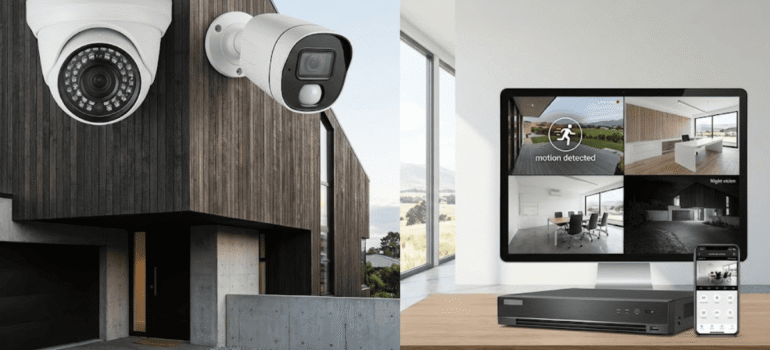
Best CCTV Buying Guide – Features to Look for in Systems

CCTV Buying Guide: Features to Look for in Modern Security Systems

Introduction

Buying a CCTV system today isn’t as simple as picking a camera and mounting it on a wall. With so many options available — different resolutions, storage types, night vision technologies, and mobile access features — it’s easy to feel overwhelmed. That’s exactly why a clear CCTV buying guide matters.

Whether you’re securing a home, office, warehouse, or construction site, the right features make the difference between a system that simply records footage and one that actually protects your property. This guide breaks down the most important features to look for, explained in plain terms, so you can make a confident, practical decision.


Why Choosing the Right CCTV Features Matters

A poorly chosen CCTV system can create a false sense of security. Low image quality, limited storage, or unreliable access often become obvious only after an incident occurs.

A well-planned CCTV buying guide helps you:

  • Capture clear, usable footage

  • Monitor activity in real time

  • Store recordings safely

  • Access cameras remotely

  • Integrate security into daily operations

The goal isn’t to buy the most expensive system — it’s to buy the right one.


Core Features Every CCTV System Should Have

1. Camera Resolution: Clarity Comes First

Resolution determines how clear your footage will be. This is one of the most important decisions in any CCTV buying guide.

Common Resolution Options

  • 720p (HD): Basic monitoring, limited detail

  • 1080p (Full HD): Good clarity for homes and offices

  • 2K / 4MP: Enhanced detail for entrances and walkways

  • 4K / 8MP: High-detail coverage for large or high-risk areas

For most homes and small businesses, 1080p or 2K provides the best balance between clarity and storage usage. Warehouses or sites with long viewing distances benefit from higher resolutions.

Professional CCTV Installation Auckland services can recommend the right resolution based on camera placement and coverage needs.


2. Night Vision: Seeing Clearly After Dark

Criminal activity doesn’t stop at sunset, which makes night vision essential.

Types of Night Vision

  • Infrared (IR): Black-and-white images in complete darkness

  • ColorVu / Low-Light Color: Full-colour footage with minimal lighting

  • Spotlight-Assisted Vision: Uses built-in LEDs for colour night recording

For outdoor areas, night vision performance becomes even more important. If cameras are mounted near external walls or roofs, checking structural integrity through Roofing Auckland NZ inspections helps prevent moisture damage to cabling or fixtures.


3. Storage Options: Where Your Footage Lives

Storage determines how long footage is kept and how easily it can be accessed.

Common Storage Types

  • Local DVR/NVR: Records footage on-site

  • Cloud Storage: Access recordings from anywhere

  • Hybrid Storage: Combines local and cloud backup

Local storage avoids monthly fees but can be damaged or stolen. Cloud storage offers flexibility but depends on internet reliability.

In commercial environments where electrical reliability matters, routine safety checks like Test and Tag ensure recording equipment stays compliant and operational.


4. Remote Access and Mobile Monitoring

One of the biggest expectations today is being able to view cameras remotely.

What to Look For

  • Mobile apps (Android & iOS)

  • Live viewing

  • Playback access

  • Push notifications for motion detection

Remote access allows homeowners and business owners to stay connected no matter where they are.

To ensure stable connections and safe power supply, outlet placement and wiring should be handled by a licensed Electrician Auckland NZ.


Advanced Features Worth Considering

5. Motion Detection and Alerts

Motion detection turns passive cameras into active security tools.

Smart Motion Features

  • Human detection

  • Zone-based alerts

  • Reduced false alarms

  • Custom notification schedules

This is especially useful in offices, warehouses, or areas near entrances.


6. Audio Recording and Two-Way Talk

Some systems offer built-in microphones and speakers.

Best Uses

  • Front door communication

  • Staff interaction

  • Deterrence warnings

Be mindful of privacy laws when using audio recording, particularly in workplaces.


7. Weather Resistance for Outdoor Cameras

Outdoor cameras must handle rain, dust, and temperature changes.

What to Check

  • IP66 or IP67 rating

  • UV-resistant casing

  • Sealed cable connections

Outdoor installations near boundaries often pair well with physical security upgrades like Fencing Auckland or Fencing New Zealand for layered protection.


CCTV Features for Different Environments

Homes

Homeowners typically prioritise:

  • Ease of use

  • Remote access

  • Smart alerts

  • Clean installation

CCTV upgrades are often combined with interior projects such as Kitchen Renovation or layout changes, where minimal disruption is preferred.


Offices

Office environments benefit from:

  • Centralised monitoring

  • Clear entry/exit coverage

  • Long-term storage

  • Compliance documentation

Electrical and network infrastructure should be reviewed by professionals, especially when adding multiple cameras.


Warehouses and Sites

High-risk environments require:

  • High-resolution cameras

  • Wide-angle lenses

  • Reliable storage

  • Night vision

Sites offering plumbing, construction, or renovation services may already be working with Plumbing Services in Auckland — coordinating CCTV installation alongside other trades reduces disruption and improves safety.


Common Mistakes When Buying CCTV Systems

Even with a good CCTV buying guide, buyers often make these mistakes:

  • Choosing low resolution to save money

  • Ignoring night vision performance

  • Underestimating storage needs

  • Assuming Wi-Fi is always reliable

  • Skipping professional installation

Working with an experienced provider like Rani Construction helps design systems that suit real-world conditions rather than showroom promises.


How to Choose the Right CCTV System Step by Step

  1. Identify areas you need to monitor

  2. Decide indoor vs outdoor cameras

  3. Choose appropriate resolution

  4. Select storage type

  5. Confirm remote access features

  6. Arrange professional installation

This structured approach ensures no key feature is overlooked.


Conclusion

A well-chosen CCTV system is built on clarity, not complexity. By following a practical CCTV buying guide, homeowners and businesses can focus on features that truly matter — resolution, night vision, reliable storage, and remote access.

The best systems don’t just record footage; they provide awareness, deterrence, and peace of mind. And with professional planning and installation, CCTV becomes a long-term security asset rather than a short-term fix.


📣 Stay Connected with RANI CONSTRUCTION

Looking to secure your property with expert CCTV, electrical, plumbing, or renovation services?
Follow Rani Construction for insights, real-world projects, and professional guidance:

👉 Facebook: https://www.facebook.com/raniconstructionltd.nz
👉 Instagram: https://www.instagram.com/rani.construction.nz

Let’s create beautiful, functional spaces together.

In Case You Missed These Posts:
Read More
Security Insurance Benefits – How CCTV Lowers Claims

Security Insurance Benefits: How CCTV Reduces Insurance Claims

Introduction

Insurance is meant to protect businesses and homeowners when things go wrong — but insurers don’t just look at what happens after an incident. They also pay close attention to how risks are managed before one occurs. This is where security insurance benefits become especially relevant.

CCTV systems are no longer viewed as optional extras. For many insurers, they are tangible proof that a property owner takes risk seriously. Whether it’s a retail shop, office, warehouse, or mixed-use property, surveillance systems reduce uncertainty, limit false claims, and help insurers assess incidents with clarity rather than assumption.

This article explains why insurers value CCTV, how it reduces insurance claims, and how businesses in New Zealand can benefit from better coverage outcomes by investing in the right security systems.


Why Insurers Care About Risk Prevention

Insurance providers operate on probability. The lower the risk, the lower the likelihood of a claim — and the better the terms they can offer.

Strong security insurance benefits help insurers by:

  • Reducing the frequency of claims

  • Minimising claim severity

  • Providing evidence for investigations

  • Discouraging fraudulent activity

  • Supporting faster claim resolution

CCTV directly supports all of these points, which is why it often appears in insurer risk-assessment questionnaires.


How CCTV Directly Reduces Insurance Claims

1. Deterrence: Preventing Incidents Before They Happen

The simplest but most effective benefit of CCTV is deterrence.

Visible cameras discourage:

  • Theft

  • Vandalism

  • Break-ins

  • False liability claims

When incidents don’t occur, claims don’t follow. This is one of the most straightforward security insurance benefits CCTV provides — fewer incidents mean fewer payouts for insurers.

Professional CCTV Installation Auckland ensures cameras are positioned where they have maximum deterrent value rather than just decorative presence.


2. Clear Evidence When Claims Are Filed

When an incident does happen, insurers need facts.

CCTV footage provides:

  • Time-stamped evidence

  • Clear sequence of events

  • Visual confirmation of damage or behaviour

  • Reduced reliance on conflicting statements

This clarity reduces disputes, accelerates investigations, and strengthens legitimate claims — a key part of long-term security insurance benefits.


3. Reducing Fraudulent Claims

Insurance fraud costs providers millions each year. CCTV significantly reduces this risk.

Examples include:

  • False slip-and-fall claims

  • Exaggerated damage reports

  • Disputed delivery incidents

  • Staff misconduct allegations

Insurers favour properties where surveillance limits ambiguity. This makes CCTV a powerful risk-management asset rather than just a security tool.


Why Insurers Prefer Professionally Installed CCTV

Not all CCTV systems are viewed equally by insurers. DIY setups may help, but professionally installed systems carry more weight.

Insurers value systems that:

  • Are correctly positioned

  • Use reliable power sources

  • Have consistent recording

  • Include proper storage and backups

That’s why working with experienced providers like Rani Construction strengthens the credibility of your security setup when dealing with insurers.

If camera installation involves wiring or power adjustments, compliance is reinforced when handled by a licensed Electrician Auckland NZ.


Security Insurance Benefits for Different Property Types

Retail Businesses

Retail environments experience higher theft and liability risk.

CCTV helps insurers by:

  • Verifying shoplifting incidents

  • Reviewing customer injury claims

  • Confirming staff procedures

Retailers often combine CCTV with layout upgrades or Kitchen Renovation projects, ensuring surveillance adapts to new store designs.


Offices and Commercial Spaces

Office claims often involve:

  • After-hours break-ins

  • Equipment theft

  • Workplace incidents

CCTV footage supports insurers by confirming access times and movement patterns, improving claim accuracy and reducing disputes — clear security insurance benefits for long-term coverage stability.


Warehouses and Industrial Sites

Warehouses face higher-value claims due to:

  • Machinery damage

  • Stock loss

  • Vehicle incidents

In these environments, insurers often expect:

  • High-resolution cameras

  • Night vision

  • Secure storage

Routine equipment safety checks via Test and Tag also support safer conditions, further lowering claim risk.


Construction and Trade Sites

Temporary sites carry elevated risk. CCTV provides:

  • Monitoring of tools and materials

  • Verification of incidents

  • Protection during off-hours

Sites offering plumbing or renovation services benefit when CCTV complements Plumbing Services in Auckland by reducing exposure to water-related electrical risks that insurers closely monitor.


Environmental Factors Insurers Evaluate

Insurers don’t just look at cameras — they assess the environment.

Moisture and Structural Risk

Water ingress increases electrical and fire risk. If CCTV wiring runs near roofs or gutters, unresolved leaks can weaken security insurance benefits.

That’s why insurers value proactive maintenance such as Roofing Auckland NZ checks alongside surveillance upgrades.


Perimeter and Access Control

Properties with controlled boundaries are considered lower risk.

CCTV paired with physical security like Fencing Auckland or Fencing New Zealand creates layered protection — something insurers consistently favour.


How CCTV Influences Premiums and Policy Terms

While CCTV doesn’t guarantee lower premiums automatically, it often leads to:

  • More favourable risk assessments

  • Reduced exclusions

  • Faster claim approval

  • Lower excess requirements

These outcomes represent long-term security insurance benefits that compound over time rather than offering one-off savings.


Common Mistakes That Reduce Insurance Benefits

Even with CCTV installed, mistakes can weaken its impact on insurance.

1. Poor Camera Coverage

Blind spots limit evidence value.

2. Low Image Quality

Footage that can’t identify people or events may be rejected.

3. No Recording Retention

Insurers may request footage weeks after an incident.

4. Non-Compliant Electrical Setup

Unsafe power supply raises risk rather than reducing it.

Professional installation and maintenance prevent these issues and protect security insurance benefits.


Best Practices to Maximise Security Insurance Benefits

To get the most from CCTV in insurance terms:

  • Install cameras professionally

  • Maintain clear signage

  • Keep footage retention policies documented

  • Test equipment regularly

  • Combine CCTV with physical security

  • Address environmental risks promptly

These steps position CCTV as a genuine risk-reduction measure, not just a monitoring tool.


Conclusion

CCTV systems do far more than record footage — they actively shape how insurers view risk. The security insurance benefits of surveillance include fewer incidents, clearer evidence, reduced fraud, and faster claim resolution.

For NZ businesses and property owners, CCTV is not just about security — it’s about credibility. When insurers see well-planned, professionally installed systems backed by safe electrical and structural conditions, confidence increases on both sides.

With expert planning and installation from Rani Construction, CCTV becomes a long-term asset that protects people, property, and insurance outcomes alike.


📣 Stay Connected with RANI CONSTRUCTION

Looking to strengthen your security setup and improve insurance outcomes?
Follow Rani Construction for expert guidance, real projects, and compliance-focused solutions:

👉 Facebook: https://www.facebook.com/raniconstructionltd.nz
👉 Instagram: https://www.instagram.com/rani.construction.nz

Let’s create beautiful, functional spaces together.

In Case You Missed These Posts:

Read More